Routine Inspections vs. Specialist Engineering
Let’s be crystal clear about where our work begins and ends: we do not replace underwater sheet piling, overhaul 50-tonne marine travel-lifts, or rewire high-voltage quayside transformer substations. Those complex tasks belong to certified commercial diving squads, naval architects, and licensed marine electrical engineers.
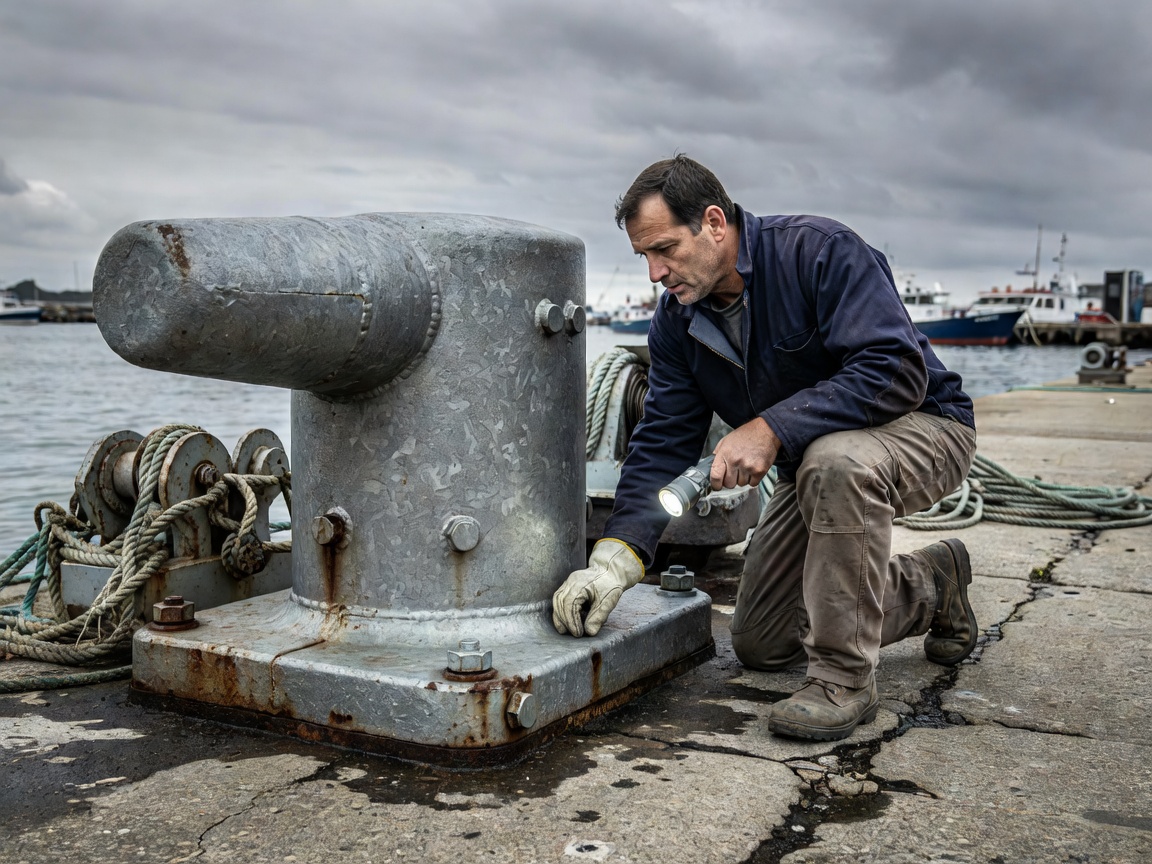
Our field operations bridge the vital gap between daily harbor cleaning and heavy engineering: preventative inspection, surface hardware upkeep, and early-warning wear logging. Our technicians walk your docks every week with calibrated eyes, identifying micro-fractures in pontoon articulation rubbers, checking whether mooring cleat bolts are backing out, and testing emergency safety ladders before someone needs them in pitch darkness.
Tidal Pile Guides, Rollers, and Hinge Bearings
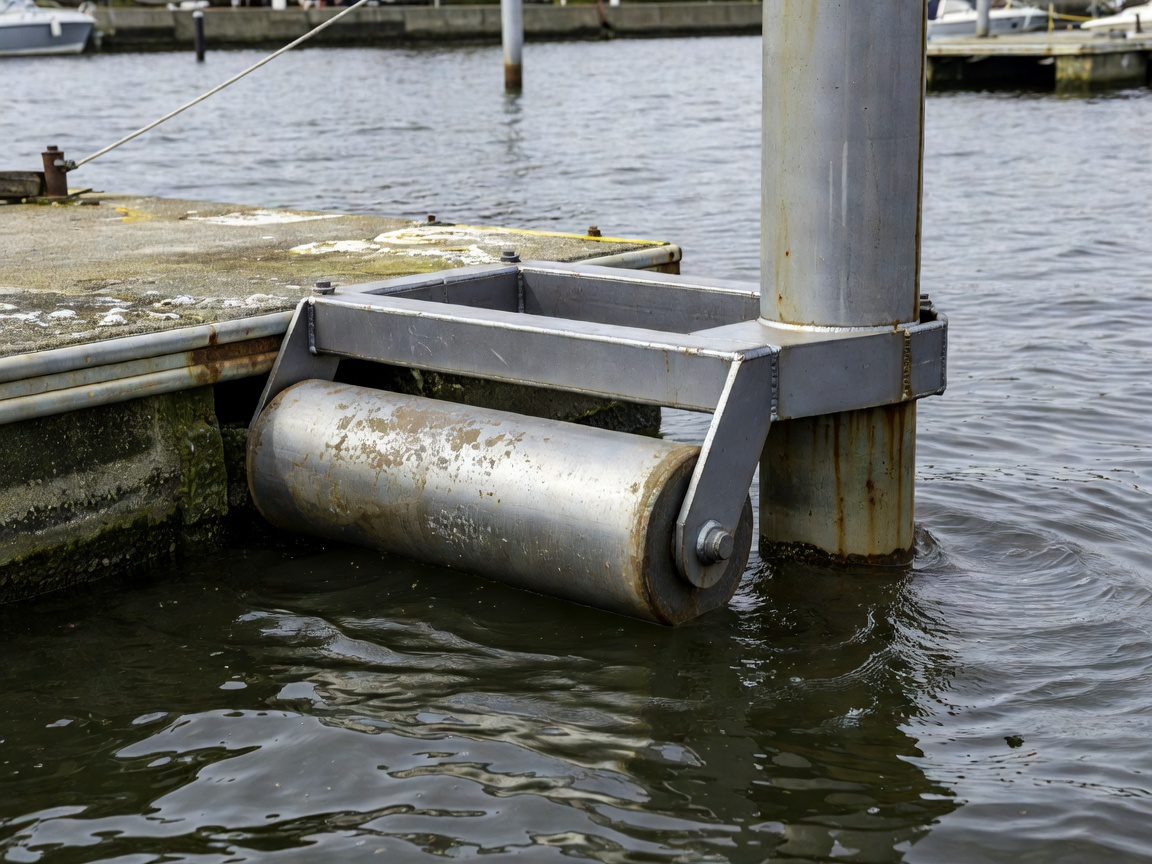
Floating pontoons rely on pile guides and heavy elastomer rollers to slide up and down with every rise and fall of the tide. When grit jams a roller or an axle pin wears thin from continuous wave chop, the pontoon begins binding on the pile. That creates dangerous lateral torque during high storm surges. Our maintenance audits include tactile checks, marine-safe grease lubrication, and debris clearing around pile collars.
Docks, Access Ramps, and Service Zones
The most common liability claims in European marinas do not involve yachts crashing into piers; they involve visitors tripping on uneven transition plates or slipping on degraded gangway ramps. Constant tidal movement flexes every gangway joint thousands of times each month.
Our facility maintenance schedules zero in on high-liability access areas:
- Gangway Hinge & Roller Systems: Checking nylon wear pads, securing transition plate anchor pins, and ensuring safety skirts or bridge plates remain flush under full tidal swing.
- Decking Fastener Retention: Wooden and composite deck boards expand and shrink with moisture shifts. Screws and clips work themselves upwards, creating trip hazards that catch toes and deck footwear. Routine re-torque audits solve this cleanly.
- Emergency Safety Stations: Checking that life rings, throw lines, quayside rescue ladders, and fire extinguisher enclosures are clean, unseized by salt crust, and clearly illuminated.
- Utility Pedestal Physical Housings: Inspecting service pedestals for broken access doors, cracked plastic lenses, dripping hose bibs, and damaged weatherproof gaskets.
Prioritizing Maintenance: From Observation to Action
A working marina will always generate a list of minor imperfections. The secret to practical harbor management is triaging those issues so your maintenance budget delivers maximum safety and asset longevity:
- Priority A (Immediate Hazard): Missing safety ladder rungs, loose mooring cleats on outer storm berths, or exposed wiring inside cracked pedestal housings. Rectified or cordoned off within hours.
- Priority B (Accelerated Degradation): Squeaking pontoon hinge rubbers, peeling non-slip coatings on steep gangways, or clogged drainage channels on vehicle slipways. Scheduled within the weekly cycle.
- Priority C (Planned Refurbishment): Cosmetic timber weathering, non-critical rub-rail gouges from yacht rub rails, and faded navigational dock markers. Handled during quiet seasonal maintenance windows.
Questions for Facility Managers to Review
Take an honest look at your current maintenance logging:
- When was the last time every single pontoon finger cleat was mechanically checked for torque and bolt fatigue?
- Do your low-water safety ladders actually extend at least 60 centimeters below the lowest astronomical tide level?
- Are service pedestal water meters checked regularly for slow underground leaks that silently inflate your municipal utility bills?
- Is there a formal photographic archive of pontoon condition before and after major winter gale seasons?